

Why Everything Became a Subscription
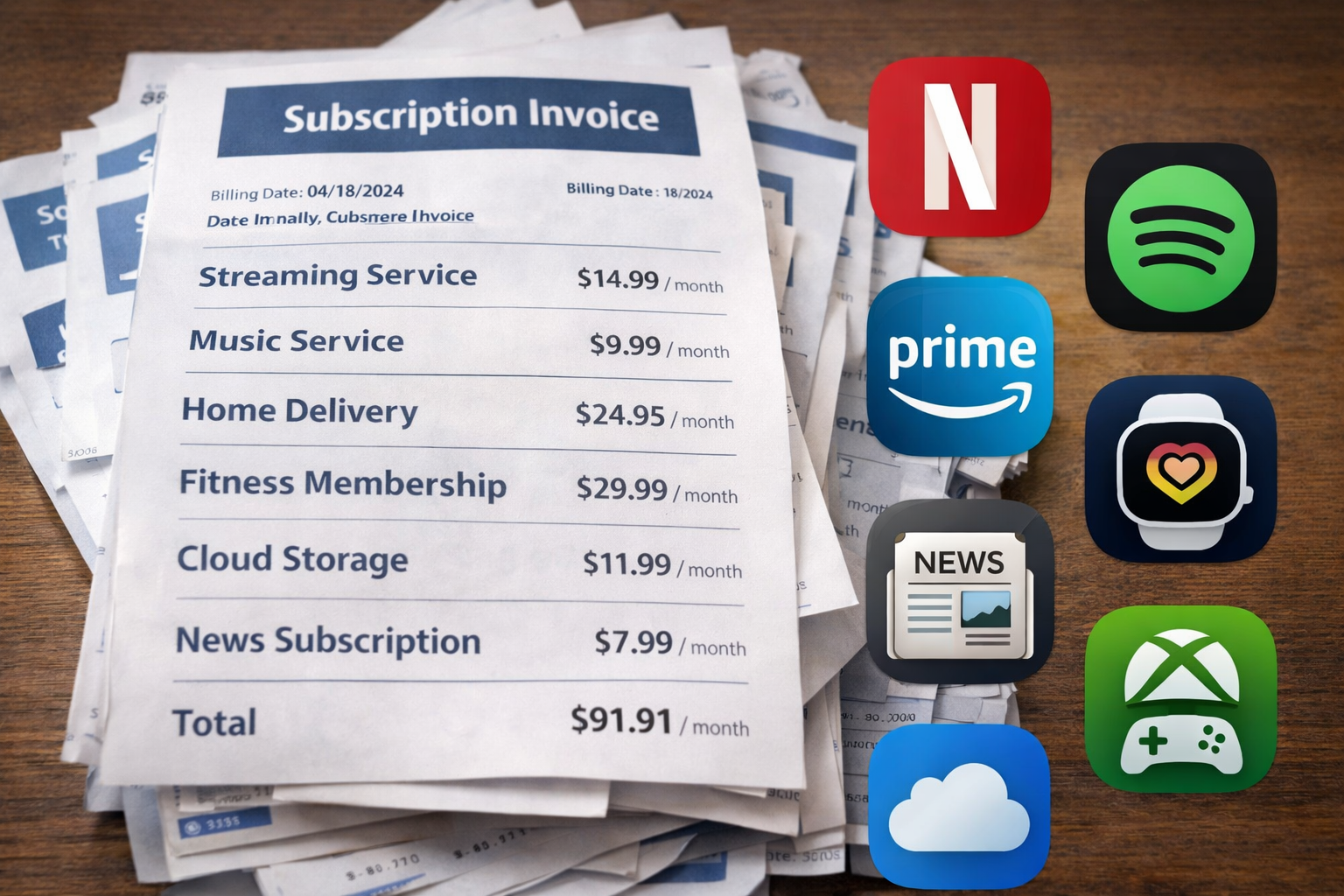
The small charge that is easy to ignore
Most subscriptions do not feel expensive when they arrive.
They show up as small monthly decisions that were made weeks or months ago, then kept going quietly in the background.
That is part of why subscription creep feels manageable right up until it doesn’t.
What recurring billing promises, and what it often becomes
The original pitch is usually simple enough: lower upfront cost, easier access, more flexibility, less commitment.
In practice, this often works differently than advertised.
Paying month to month can feel lighter than buying something outright, but over a longer stretch, the total cost is often higher. You may spend more while owning less, with fewer guarantees about what stays included.
That shift matters because the model changes what the customer is actually purchasing. It is no longer just a product or service. It is ongoing permission to keep using it.
The deal can narrow after signup
Taken in isolation, each change feels minor.
A feature moves to a higher tier. A plan that used to include one thing now includes less. A bundle becomes the default. An ad-free version becomes more expensive relative to the ad-supported one. A membership keeps the name but quietly changes the value.
This is the quiet downgrade.
The service still exists, and the charge still looks familiar, but the terms become narrower over time. Access gets reshaped through tiering, feature gating, device limits, usage caps, or bundling that makes comparison harder.
Who the model is really built for
Subscriptions now cover software, streaming, memberships, devices, delivery services, home essentials, and household maintenance because the model travels well.
It works especially well in categories where access matters more than ownership, where convenience reduces scrutiny, and where the customer is likely to keep paying to avoid interruption.
It also works well for products people only use unevenly.
A customer may use a service heavily for one month, lightly for two, then barely at all, while the billing remains perfectly consistent.
Why companies keep choosing it
This follows a familiar pattern.
Recurring revenue is easier to forecast than one-time purchases. It smooths cash flow, raises lifetime value, and gives companies a cleaner growth story than irregular sales spikes.
The structure rewards retention, not just satisfaction.
That is why so much energy goes into onboarding, bundling, annual plans, family tiers, loyalty perks, and cancellation friction. The ideal customer in a subscription model is not necessarily the person who uses the product constantly. It is often the person who keeps paying with minimal review.
None of this requires bad intent to work.
It is simply a model that aligns neatly with planning, reporting, and revenue optimization on the company side, while relying on low-friction habit on the customer side.
The consumer side of the tradeoff
For customers, recurring billing can be genuinely useful.
It spreads cost, removes setup friction, and can make irregular needs easier to handle. Some subscriptions do function like utilities and are worth treating that way.
The problem is not that subscriptions exist.
The problem is that small charges stack, usage drifts, and the terms can change while the habit remains. People do not usually make one irrational decision. They make many reasonable-seeming ones that overlap.
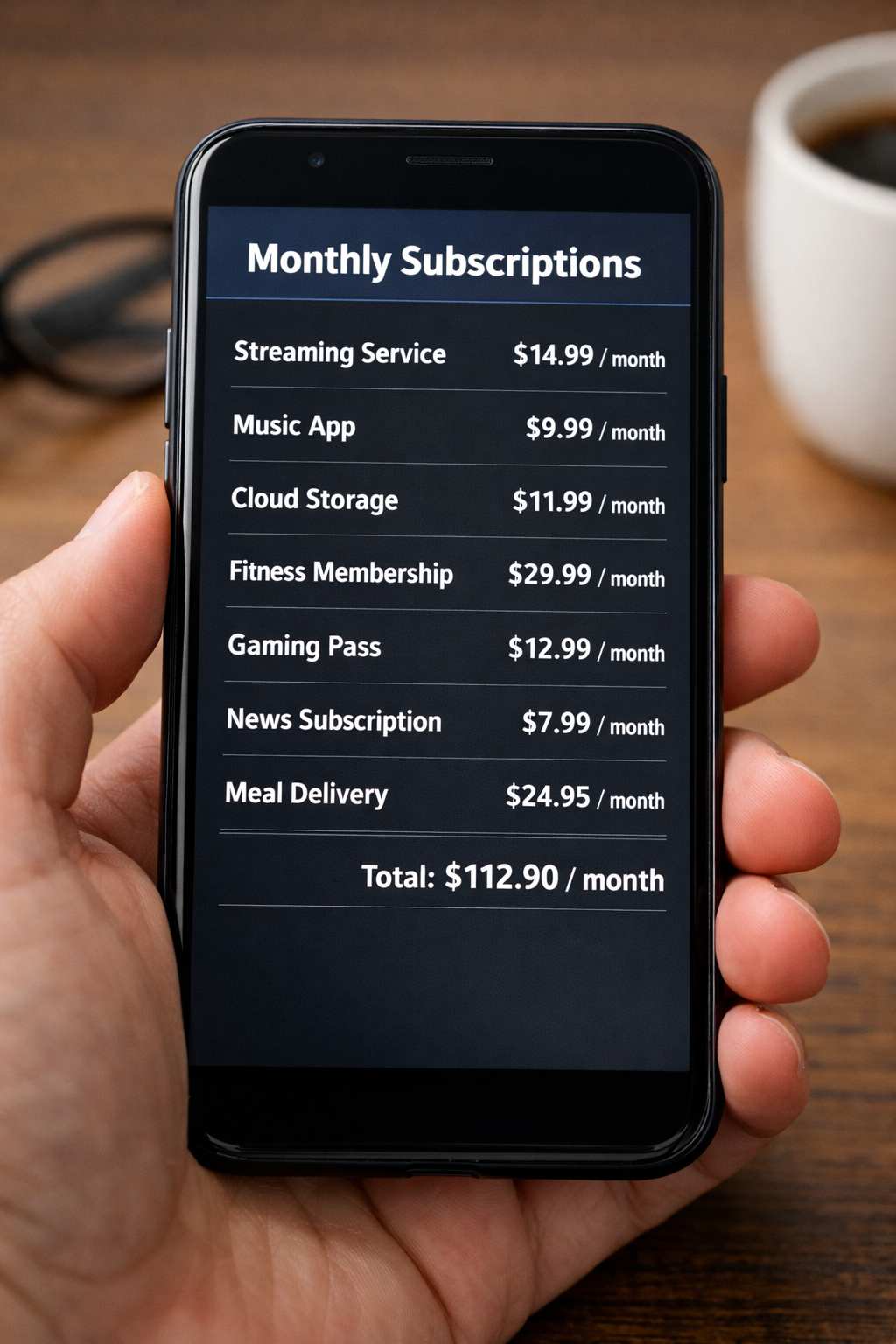
A streaming service here, a software plan there, a membership attached to faster shipping, a device protection bundle, a cloud storage upgrade, a meal or delivery pass that made sense for one busy stretch and then never got revisited.
How cancellation friction changes behavior
Cancellation friction matters for structural reasons, not just emotional ones.
Any extra step between “I should stop paying for this” and the actual cancellation raises the odds that the subscription survives another billing cycle. Sometimes that friction is procedural. Sometimes it is just mental overhead.
The structure does not need to trap everyone.
It only needs enough people to postpone the decision because they are busy, uncertain, or mildly inconvenienced. At scale, that is enough.
A calmer way to reduce subscriptions without losing much
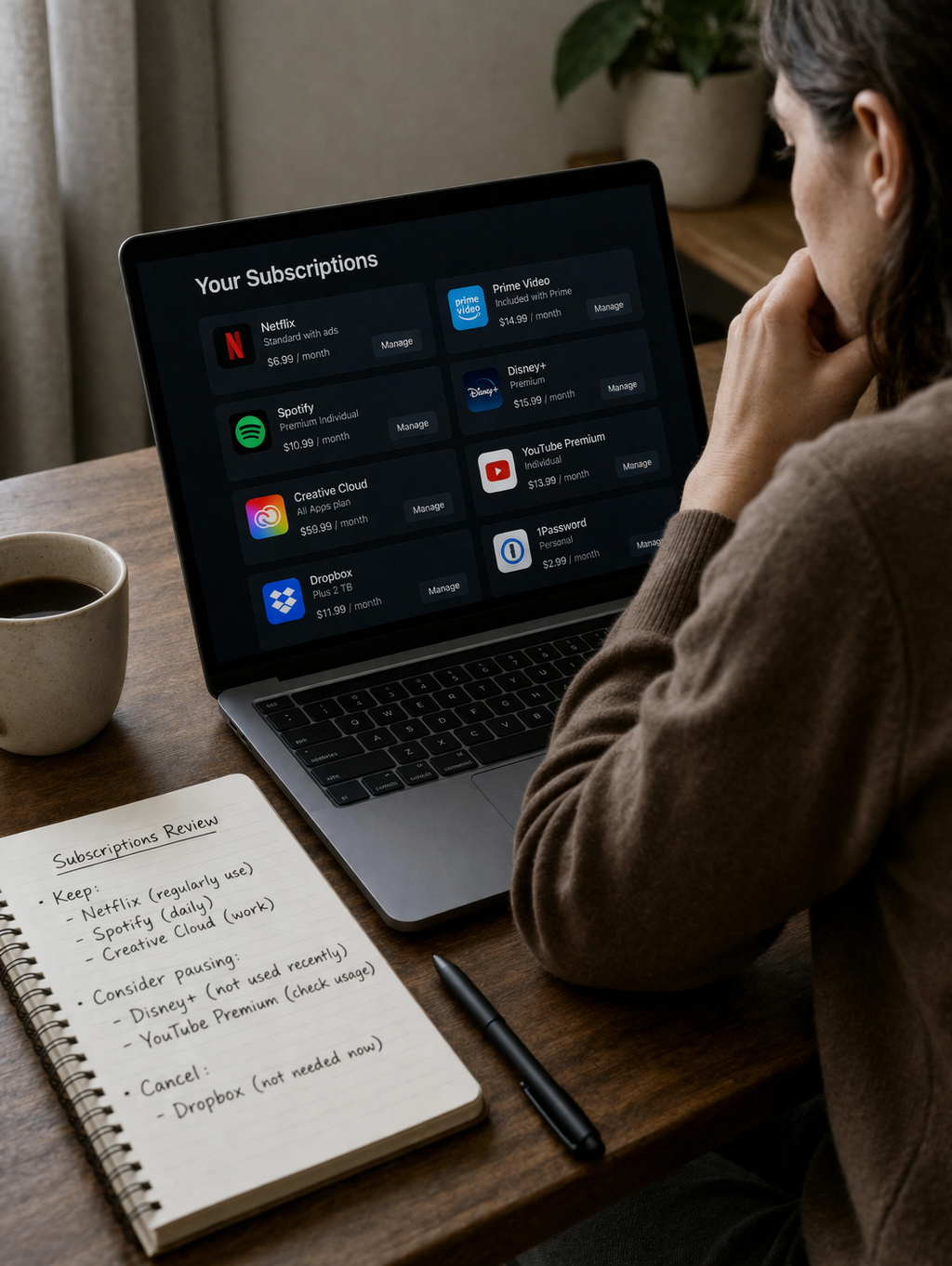
Run one full audit each year
Look at every recurring charge in one place.
This is less about budgeting discipline than visibility. Charges feel smaller when separated, and more substantial when seen together.
Separate utility subscriptions from aspirational ones
Some subscriptions support real, repeated use.
Others are tied to an ideal version of your life: the platform you mean to use more, the membership you assume will become useful, the service attached to a routine that never fully formed.
That distinction helps quickly.
Track the last-use date before renewing
Before a renewal hits, ask when you last used it in a meaningful way.
Recent use is not a perfect test, but it is often more honest than general intention.
Rotate instead of stacking
Most people do not need multiple overlapping entertainment or convenience subscriptions at the same time.
Rotation preserves access without paying for parallel abundance that goes mostly unused.
Downgrade only when the lower tier still fits actual behavior
A cheaper plan is not always a better plan.
Ad-supported tiers, lighter memberships, or reduced-feature plans make sense when usage is casual enough to justify them. If the downgrade creates enough friction to push you back up within a month, the savings were mostly theoretical.
Cancel default renewals when the service is seasonal
Some subscriptions are only useful in certain periods.
It often makes more sense to rejoin when needed than to preserve continuity out of habit.
Replace convenience subscriptions with occasional one-off purchases
A delivery pass or premium membership can feel efficient because the charge is fixed and automatic.
But many convenience services are only economical under steady usage. If your usage is sporadic, paying per order or per need can be the simpler model.
Keep only the subscriptions that survive a 30-day pause test
Pause tells the truth faster than intention does.
If you can stop for 30 days without much disruption, the subscription may be more optional than it first appeared.
None of this is really about self-control
Subscription creep is not mainly a story about personal failure.
It is the predictable result of a pricing system designed to feel light in the present, stay sticky over time, and blur the relationship between usage and cost.
That is why the best response is usually not a dramatic purge.
It is a quieter reset: keep the few that still function like real utilities, question the ones that survive on habit, and let ownership, one-off purchases, or simple gaps do more of the work again.
None of this is new. The pattern will repeat unless the incentives change.